(02) 252 3236
![$rows[judul]](http://iycw-aspac.org/asset/foto_berita/ASPAC_networking.jpg)
On
June 8, 2026, the International Young Christian Workers Asia-Pacific (IYCW-ASPAC)
participated in a research dialogue organized by the Institute of Labor Studies
(ILS) of the Department of Labor and Employment (DOLE) in Manila, Philippines.
The
dialogue was part of a research project entitled “Workers’ Associations and
Non-Traditional Labor Organizations: Exploring Avenues as Entry Points for
Representation.” The study aims to understand how workers’ associations
and other forms of worker organizations help workers represent their concerns
and assert their rights.
During
the discussion, the Institute of Labor Studies shared that union membership in
the Philippines has continued to decline in recent years. This is mainly due to
contractualization, outsourcing, and the growing number of workers in digital
and platform-based jobs. While workers have the constitutional right to
organize and the country has ratified international standards on freedom of
association, many workers still face difficulties in forming and joining
unions.
The
research also highlighted the growing role of workers’ associations and other
non-traditional labor organizations. These groups serve as alternative spaces
for workers to come together, support one another, and raise their concerns,
especially for those who are not covered by traditional unions.
Representing
IYCW ASPAC, we shared the realities faced by many young workers. One of the
major challenges is union repression, where workers encounter resistance from
employers when trying to organize unions or workers’ associations. Many young
workers continue to experience violations of their labor rights, including insecurity
of employment and lack of protection in the workplace.
We
also raised concerns about contractualization and labor-only contracting
arrangements that continue to deprive workers of security of tenure. In many
cases, workers feel that labor inspection and investigation processes do not
fully reflect their experiences because of the limited participation of workers
in these mechanisms.
As
a movement committed to the dignity of work and the empowerment of young
workers, IYCW believes that workers must have genuine opportunities to organize
and participate in decisions that affect their lives and livelihoods.
We
hope that this research will contribute to stronger policies that support
workers’ associations and other forms of worker organizing. More importantly,
we hope it will help ensure that the voices of workers, especially young
workers, are heard, recognized, and represented in shaping labor policies and
defending workers’ rights.
Through
dialogue, organization, and collective action, young workers can continue to
build a society where work is dignified, rights are respected, and every worker
has a voice.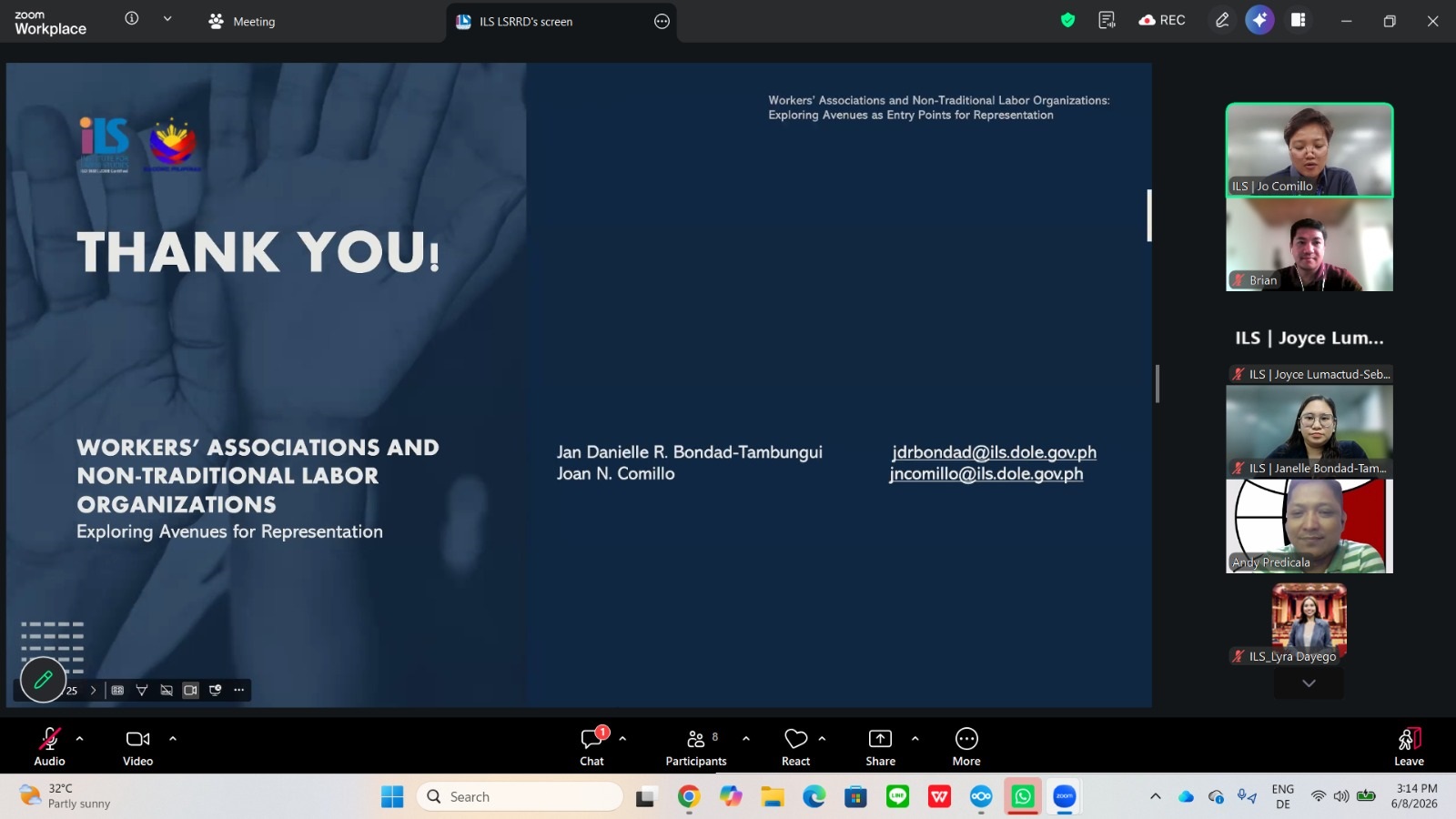


Write comment