(02) 252 3236
![$rows[judul]](http://iycw-aspac.org/asset/foto_berita/CSFASPAC3.jpg)
(Catholic Social Forum on UN
Sustainable Development Goals and Catholic Social Teaching; Inspired by Dilexi
Te)
Last February 27, 2026, various Catholic movements in the Asia-Pacific—such as the International Young Christian Workers (IYCW), International Movement of Catholic Students (IMCS), International Young Catholic Students, and Pax Romana—came together to organize an online forum and dialogue on the United Nations Sustainable Development Goals (SDGs) and Catholic Social Teaching in light of Dilexit Te.
In a time marked by
deep social inequalities, environmental crises, and rapid technological change,
Catholic movements and civil society organizations in the Asia-Pacific are
being called to renew their commitment to justice, solidarity, and love for the
poor. The keynote address of Jojo Fung, S.J., professor at the Loyola School of
Theology, provided a profound reflection on Dilexit
Te, the Apostolic Exhortation of Pope Leo XIV, and its relevance to
the global call for sustainable development and the Church’s mission of
promoting human dignity and integral development.
At the heart
of Dilexit Te is
the message of Jesus: “I
have loved you.” This love is not passive or sentimental. It calls
Christians to actively love the poor, the marginalized, and those who suffer.
Poverty, as highlighted in the reflection, is not a personal choice but a
result of unjust structures. Therefore, loving the poor also means confronting
the systems that keep people poor.
This
message resonates strongly with the teachings of Pope Francis, particularly in
Laudato Si', which reminds us that “everything is connected.” The cries of the
poor and the cries of the earth are inseparable. Similarly, Christus Vivit
highlights the role of young people as agents of social transformation.
In this
context, faith must lead to concrete action. Spirituality must move beyond
reflection and become a force for transformation in society.
Catholic
movements and civil society groups play a crucial role in responding to today’s
global and local crises. As members of these communities, we are called to be
guided by Catholic Social Teaching and to engage in building a more just and
compassionate society.
The United
Nations, the only global body that gathers different governments, provides a
framework through the Sustainable Development Goals. These goals emphasize
dignity, justice, sustainability, and especially partnerships—the last and most
crucial SDG. The Church’s engagement with the UN highlights the need for global
solidarity and cooperation across borders.
The vision
of a “new heaven and a new earth” requires the collaboration of governments,
faith communities, and grassroots movements. Structural change cannot happen
without public policy and institutional support.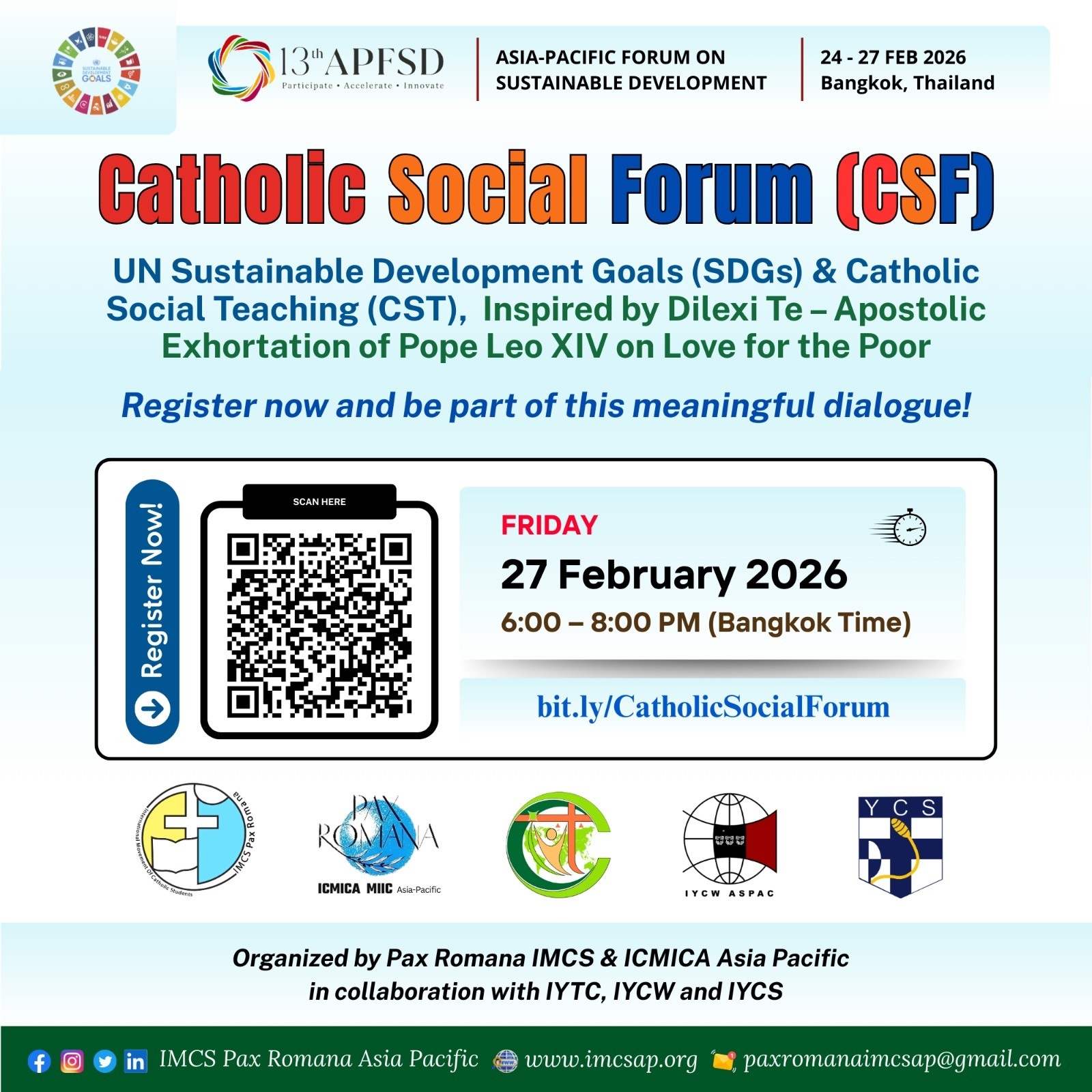
Four panelists
from Catholic youth movements shared their experiences of working directly with
the poor. Their reflections highlighted several key priorities:
Education for the poor as a path toward empowerment
Women’s leadership and empowerment
Faith that leads to community building and policy advocacy
Action–reflection rooted in real-life experiences
Listening to the cries of the poor and the earth
They
emphasized that spirituality must be lived through concrete engagement. Healing
the wounds of injustice requires persistence in the struggle for justice, even
when the path is difficult.
The forum
also emphasized the importance of institutional strategies:
Integrating the SDGs into pastoral and formation programs
Educating grassroots members in policy literacy
Advocating for structural reforms
Promoting climate justice and human rights
Supporting equitable distribution of wealth
Collaboration
is essential. Faith-based organizations must work with civic groups, academic
institutions, governments, and interfaith networks. These partnerships
strengthen global engagement and foster fraternity across borders.
The work
of justice is not merely technical. It is stewardship—a gift entrusted to
humanity. This responsibility calls for ethical leadership, care for creation,
and solidarity with those who suffer.
Despite
these opportunities, the Asia-Pacific region faces serious challenges,
including:
Precarious and informal work
Labor migration and family separation
Environmental destruction in the name of development
Weakening democratic institutions
Social inequalities and exclusion
These
realities raise critical questions. Does loving the poor mean tolerating unjust
structures? Catholic Social Teaching recognizes the concept of “tolerated
evils”—situations that are not morally good but are temporarily accepted to
prevent greater harm. However, the Church does not call us to accept injustice.
Rather, it challenges us to transform it.
This
transformation requires regional solidarity. Catholic movements must work
together while also responding to local realities. Through collective action
and shared learning, young workers and communities can become agents of change.
The call
today is clear: renewal of commitment, solidarity, and dialogue. The Church is
invited to journey together in a synodal way—listening, discerning, and acting
in unity.
Building a
just and compassionate society requires:
Reflection that leads to action
Faith that becomes solidarity
Collaboration across borders
Advocacy for justice, peace, and human dignity
The
message of Dilexit Te
is both a challenge and an opportunity. Love for the poor must become a transformative
force in the Asia-Pacific. It calls Catholic movements, young people, and civil
society to move beyond charity toward justice, to heal wounds, and to work
together for a world where dignity, peace, and care for creation prevail.
In this
shared mission, the Church and the global community can truly respond to the
cries of the poor and the earth—building a future rooted in love, justice, and
hope.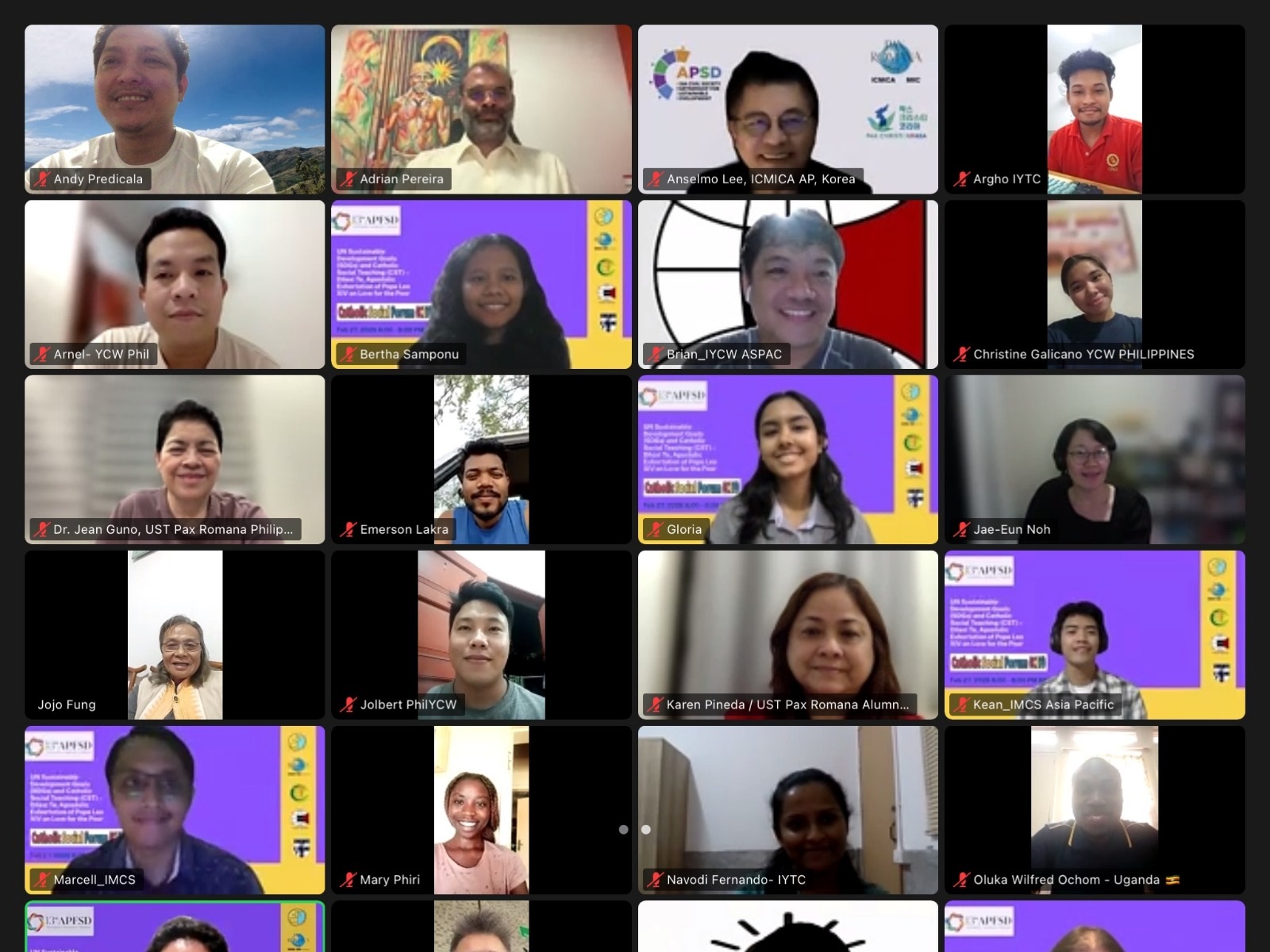


Write comment